How to Run an Online Tutoring Business: Video, Whiteboard, Homework and Payments Without Ten Tabs
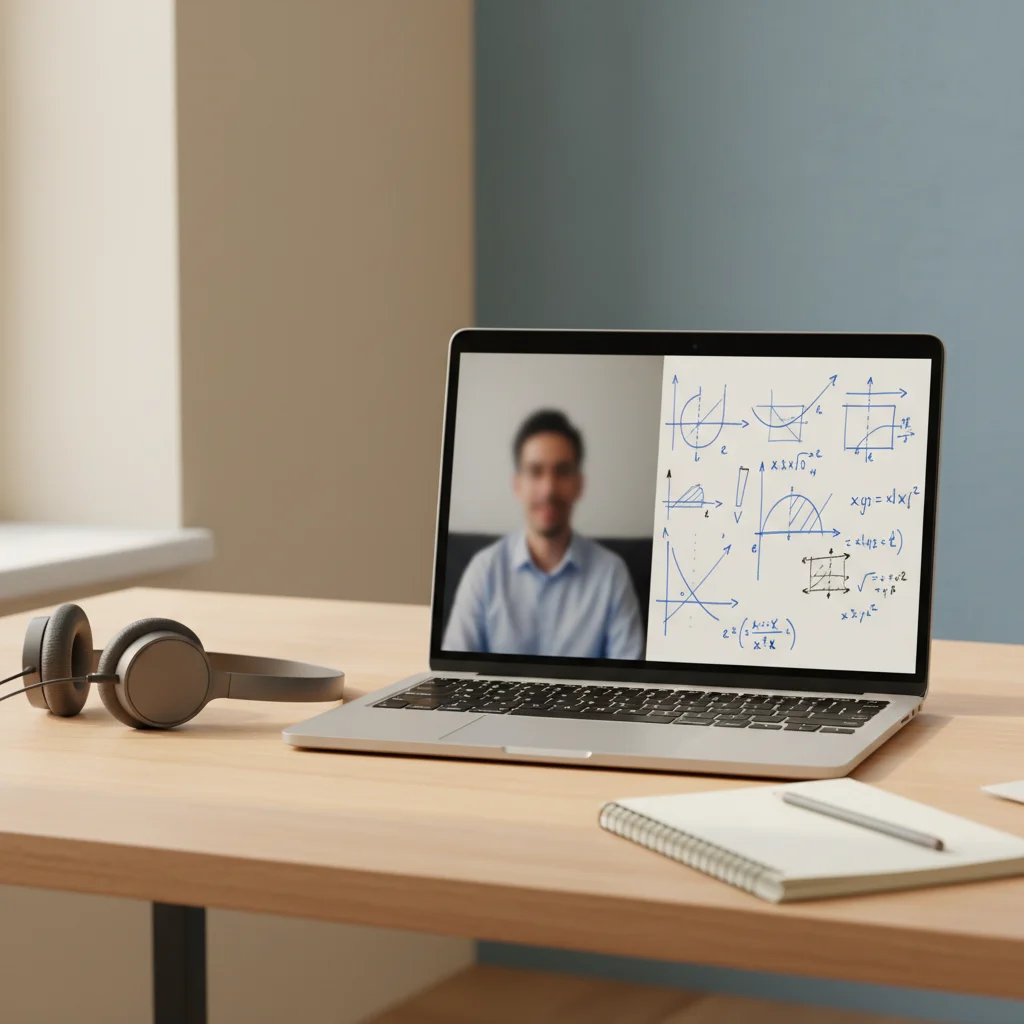
How do you run an online tutoring business?
Running an online tutoring business well comes down to one thing most guides skip: closing the gaps between the tools you use. A good online session needs video and a shared whiteboard in the same place. The part after the session needs homework, marking, a progress picture and payment that all connect back to it. Most owners stitch this together from a video app, a separate whiteboard, a spreadsheet and manual bank transfers, then pay for it in lost minutes and blind spots. The alternative is one system where the session and everything that follows it live together, so nothing falls through the seams.
That is the whole game online. The tabs are the tax.
The real cost of stitched-together tools
When people ask how to run online tutoring, they usually mean “what video app should I use.” That is the easy 5% of the decision. The expensive 95% is what happens in the gaps between your apps.
I ran EquateIt on a stitched-together stack before we built our own, and the moment that summed it up was realising I was paying twice for the same session. You buy a tutoring-management system like Wise or TutorBird to run your bookings and admin, and then you still have to buy a separate whiteboard like BitPaper to actually teach on, because the management tool has no teaching surface. Or you skip the second subscription, use the whiteboard built into Zoom, and discover at the end of the lesson that it will not save the work you just did together. These were tools meant to help me, I was meant to use one piece of software, and somehow I was paying for two and still losing the thing that mattered.
That is the shape of the problem. Every seam between two apps is a place where something gets dropped. The worksheet a tutor meant to send. The payment that never got chased. The board full of worked examples that vanished the second the call ended. At one or two students you hold it together by memory. At twenty students across three tutors, the memory is gone and the seams are where your quality control quietly leaks out.
So the useful question is not “which video tool,” it is: how few systems can a session and its follow-through live in?
The session itself: video and a whiteboard in the same window
An online tutoring session has two non-negotiable parts. You need to see and talk to each other, and you need a shared surface to actually work on. Do maths, physics, chemistry or anything with working, and the shared surface is where the teaching happens. A student who can only watch a tutor talk is watching a video, not being tutored.
The default stack solves this with two apps: a video call in one tab, a whiteboard in another. It works, in the sense that a car with a spare tyre bolted to the roof works. It also means every session opens with a link to send, a second app to load, and a student fumbling between windows while the clock runs.
Video without the meeting-link ritual
Built-in video removes the smallest, most repeated friction in online tutoring: the meeting link. No separate video subscription, no link to generate and paste into a chat before every single lesson, no student sitting in a waiting room because the tutor forgot to admit them. The session is just there when it is time. ClassQuill’s live classroom runs video on Daily.co inside the session itself, so starting a lesson is one click, not a pre-lesson admin routine repeated hundreds of times a term.
A shared whiteboard that saves your work
This is the part that actually changes the lesson, and the difference is not that ClassQuill has a whiteboard. Everyone has a whiteboard. The difference is that the work does not disappear.
Think about what a maths or science lesson actually produces: a board full of worked examples, the exact step where a student went wrong, the diagram you drew together to make an idea click. On Zoom’s built-in whiteboard, that is gone the moment the call ends. On a separate tool like BitPaper, it lives in yet another account the student has to remember to open. In ClassQuill the whiteboard sits in the same window as the video, shared live between tutor and student, and it saves. Both people write, draw and annotate in real time, there is a maths-teacher stencil library for graphs, number lines, geometry and working so nobody is re-drawing axes by hand, and when the session ends the board is kept and can be exported. The student can look back at exactly what you worked through. Next week’s tutor can see it too.
That is the small thing that turns out to be the whole thing. The point of an online session is not the sixty minutes of talking. It is the record of what you did together, and a teaching surface that forgets everything the second you hang up is throwing away the most useful thing the lesson made.
It is worth being blunt about why this is rare. The full tutoring-management platforms owners usually compare, like TutorBird, TutorCruncher and Teachworks, run your operations but have no live teaching surface at all: they assume you will bring your own video and your own whiteboard. The tools that do whiteboards well, like BitPaper or Pencil Spaces, are point-tools with no scheduling, no billing and no student records behind them. A live whiteboard that saves your work, bundled into the same system that also handles your bookings, homework and invoices, is genuinely rare, and it is the reason an online session does not have to mean juggling three logins and losing the board at the end.
After the session: homework that marks itself, and a progress picture that builds
The session ending is where a stitched stack falls apart most quietly. On disconnected tools, homework is a worksheet emailed out, marked by hand if it gets marked at all, and the result lives in the tutor’s head. The next tutor to see that student starts blind.
In one connected system, the follow-through is a by-product of the session rather than a second job. A tutor sets homework from a question bank, it is auto-marked, the result flags the exact step where the student went wrong, and it rolls up into a topic-by-topic picture of what that student knows. Nobody re-enters anything into a spreadsheet, because the marking is the data. Any tutor who picks that student up next sees the full history, so a cover session or a tutor change does not reset the student to zero.
The change this made to how we actually teach was bigger than I expected. Once the progress was tracked automatically and the whole board and question history carried over, I stopped opening sessions by asking a student what they wanted to cover or re-diagnosing where they were. I already knew. The lesson started on the real gap instead of spending the first ten minutes finding it. Sessions got far more targeted, students got more out of the hour, and both student and parent satisfaction went up, which is the thing that quietly drives referrals.
That progress picture is not just an internal nicety. It is what a parent renews on, and online, where a parent cannot glance through a doorway and see their child working, visible evidence of learning matters even more. The same records that give you quality control across every tutor give a parent something concrete to see, which is the difference between a family that stays and one that drifts toward cancelling. If you want the operator argument for why that is the whole ballgame, it is in our piece on what’s real and what’s hype in tutoring AI.
Getting paid without chasing it
Online tutoring removes the cash-in-hand option entirely, so payments become their own admin job the moment you have more than a few families. On a manual stack that means invoices typed up by hand, bank transfers to reconcile, and the awkward follow-up texts to parents who forgot.
Connected billing drafts the invoice when a session is marked complete, takes card payment through Stripe, and syncs to Xero for your books, so getting paid becomes a thing that happens rather than a thing you do. If you already run other tools, ClassQuill connects out to them through Zapier. The point is not the feature list. It is that the money side stops being a weekly chase and stops being the reason you run out of evenings.
When is consolidating into one system actually worth it?
Honesty matters here, because “put everything in one platform” is exactly what every all-in-one vendor says. The real answer is that it depends on your scale.
If you are a solo tutor with five students, a stitched stack is fine. You hold it in your head, the seams are small, and a dedicated platform is overhead you do not need yet. The moment consolidation earns its cost is when more than one person needs to see the same information: when you add a second tutor, an admin, or enough students that no single person can remember them all. That is the point where the seams stop being minor friction and start being where your quality control, your retention and your evenings disappear.
The test is not “is there a better video app.” It is: when a tutor changes, does the student’s history follow them, or reset? If it resets, you have a seam problem that no amount of better individual apps will fix.
| Stitched stack (video app + whiteboard app + spreadsheet + bank transfer) | One connected system | |
|---|---|---|
| Starting a session | Generate and send a link, load a second app | One click, video and whiteboard already together |
| Teaching surface | Separate whiteboard app, extra login, work often lost at the end | Live shared whiteboard in the same window, saved and exportable |
| Homework and marking | Emailed out, marked by hand if at all | Set from a bank, auto-marked, flags the wrong step |
| Student progress | In the tutor’s head or a spreadsheet | Topic-by-topic, follows the student across tutors |
| Parent visibility | A one-line text | A progress view the parent can actually see |
| Getting paid | Manual invoices, chasing transfers | Auto-drafts on session complete, Stripe and Xero |
| What breaks at scale | Every seam between apps | The follow-through is a by-product, not a job |
Online, in-person, or hybrid? My honest take
Since I have run EquateIt online, the question I get most from other owners is whether fully-online is really the right model. My honest answer is online by default, but it genuinely depends on the family and the student.
Start with the case for online, because I lived the counter-example. I grew up in a regional area and had an in-person tutor who was not good. Looking back, I would have been far better off with an online session from a better-quality tutor than with the local one I could physically get to. That is the real argument for online: it is access to quality regardless of where you live. It is also usually cheaper, because there is no transport and less total time cost, which changes what a family can actually afford compared with the premium in-person carries.
The nuance is the student’s level and goal. A student who is struggling, where the goal is simply to pass, often benefits more from in-person, because the in-room support and the harder-to-drift-off setting matter. A student chasing top marks tends to do just as well online as in person. So the right answer is not a slogan, it is a read of the family in front of you: how busy the parents are, whether a strong local tutor even exists near them, the student’s level, and the budget. Online widens the pool of tutors a family can reach, and for a lot of families that is the difference between a good tutor and whoever happens to be nearby.
Where this leaves you
Running an online tutoring business is not a video-software decision. It is a decision about how many gaps you are willing to manage between the moment a session ends and the moment the next one starts. Fewer systems means fewer places for a student to fall through, and online that is the whole risk, because you cannot see them in the room.
If you are building the operation now, the full operator guide to starting and scaling covers the rest of the stages. If it is specifically the online model you are running, ClassQuill for online tutoring is the same system EquateIt runs its own online sessions on, saved whiteboard and all.
Related reading
- How to start and scale a tutoring business: the full operator guide
- Tutoring software with AI: what’s real and what’s hype: the honest read on the “AI” claims
- ClassQuill’s live classroom: video and whiteboard in the same session